VVP: Art 434 & Engl. 410

Website for Vision Voice and Practice: An Interdisciplinary Course in Art and Creative Writing

Saturday, April 27, 2019

Cross-Genre Conversation Piece #2

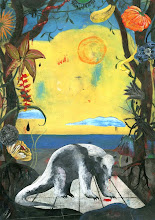
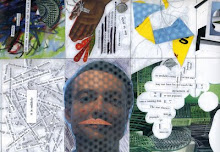
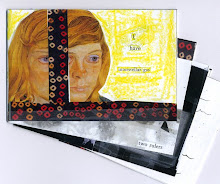
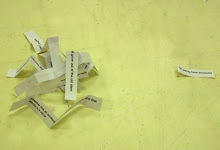
For this piece, students were to respond to the work of an artist-writer pairing--in this case the artist Kerry James Marshall and the writer George Saunders--and make, in the space of an hour, something that responds to either Marshall, Saunders, or some combination of the two. Some students took pieces that were made prior to the assignment and disrupted them in some way; some students prepped for a while before they got to work; still others used only one hour, from start to finish. Below are some of the results.
 ~

Andres Ramirez:
 ~
Bethany Foster:
 ~
Caylie Smith:
 ~
Claire Jacobson:
 ~
Erica Mahnke:
~
Fae Naughton:
 ~
Katherine Sherlock:
 ~
Irene Paek:
 ~
Hannah Strandberg:
 ~
David Giles:
 ~
Kyol Shorack:
 ~
Lydia Meyerdirk:
 ~
Marijane Fasana (Something is Off):
 ~
Megan Bass:
 ~
Micayla Jones:
 ~
Shell Grizzard:
 ~
Esther Hedin (skeleton with a mullet contemplates his geode):
 ~
Olivia Blair:
~
Brendon Sylvester (Untitled):

    Charlie flailed his chubby hands at the stuffed-animal bunnies hanging from the mobile above him. They all wore pajamas, and slept on different parts of the sky. One used a little cloud for its pillow, another a star, another a little crescent moon. Fred, Charlie’s adopted father, watched him happily. Charlie’s chocolate skin was stark against his crib’s white blanket. They’d done a good thing in adopting Charlie, him and Diane. The foster cycle was miserable. They had a chance to raise him with good parents, in a nice neighborhood, maybe send him to a private school...not that they were his saviors or anything, the white parents saving the black kid—
    “Any children you have on this plantation aren’t yours. They’re mine.”
    “Daddy, how come I’m brown and you’re not?”
    Oh no. How could he answer that question without—without what? Racially oppressing his son? One had to be very careful in these situations, use very precise rhetoric so that Charlie wouldn’t get the impression that he was—no, that Fred thought he was worse or inferior or even the same without talking at all about the history of racial oppression while also remembering that this was a little boy, his Charlie wearing untied light-up shoes and a Spiderman jacket and big brown innocent eyes that hadn’t seen or heard about any of this and he first had to explain the whole adoption thing to him, where was Diane?
    “Listen, little ———. Get this in your head early. You’re not one of us. You can’t eat here, you can’t eat this food, you have to eat in the lodges with all the other ———s”
    “Dad, what does ——— mean?”
    Fred turned around and Charlie’s eyes were red. Oh nonononononononono—how could he, what could he, why were white people—
    “Who said that? Did someone call you that?”
    “Yeah,” he said slowly “Elliot, from school. What does it mean?”
    Elliot from school. How does a third grader—
    “That—it’s a very bad word that, um, white people—other white people, I wouldn’t—it was back in the old days—it’s a mean thing to call black people, Charlie, they did it in the slave days, when white people used to keep black people as slaves.”
    “Oh.
    “Did your grandparents have slaves, Dad?”
    Why? Why why why did he have to answer these things? Was this a bad idea? Was he trying to rectify a thing that could never be rectified by playing Jesus in a way that just ended up hurting—
    “I—um—I, yeah, I uh—I, I think they did, Charlie”
    “It’s funny how quick they take to the whip sometimes, isn’t it? You’d think they wouldn’t like hittin’ their brothers. Just goes to show, I guess.”
    “Well, mom, dad—I’ll see you at Thanksgiving—”
    “You’ll visit more often than that, right?”
    “He doesn’t have to, Diane—did you meet your roommate since Wednesday?”
    “Yeah. Some white guy.”
    Diane squinted—“You know that we’re...”
    “I know, I know. See you, mom.”
    “Can always tranfer to Bob Jones,” said Fred.
    Charlie laughed, “Can always transfer to Bob Jones. Bye Dad.”
    They hugged, Charlie went inside, and Fred and Diane left.
    Did they do it right? What would it be like for him having had white parents, did they give him enough, or were there some things...?
~
Cameron Bascombe:


Extended Collaboration #2

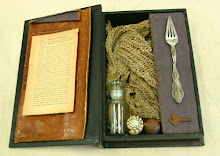
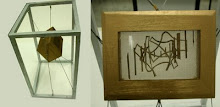
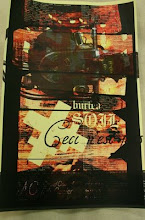
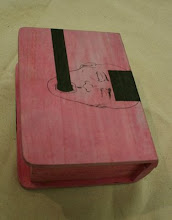
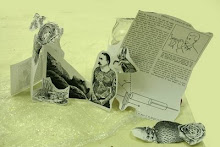
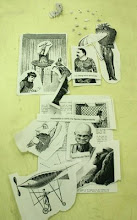
For this project, writing and art students were put into collaboration teams of three and asked to make something that combines alphabetic text and visual material. Whereas the first extended collaboration of the semester was to privilege, as vehicle, the text plane (that is, it was to take the form of an object where alphabetic text is usually delivered, like a book), this "something" was to privilege the picture plane: framed painting, video, sculpture, etc. (We did get one book, as you'll see.) Anyway, the work was wonderful. You can check it out below.
~
Andres Ramirez, Shell Grizzard, Olivia Blair:
~
Micah Hickerson, Claire Jacobson, Irene Paek:
~
Katherine Sherlock, Brendon Sylvestor, Kyol Shorack:
~
Cameron Bascombe, Fae Naughton, Megan Bass:
 
~
Amy Struthers, Esther Hedin, Micayla Jones:
~
Caylie Smith, David Giles, Rachel Ji:
~
Aidan Acone-Chavez, Marijane Fasana, Erica Mahnke:


~
Bethany Foster, Lydia Meyerdirk, Hannah Strandberg:

Monday, April 15, 2019

Spot Collaboration: Private and Public Art

Earlier this semester, we talked in class about notions of "public" and "private" art and writing. For public art, we looked at several examples, including Robert Montgomery's language-and-light sculptures; Ted Prescott's The True Vine; Walt Whitman's "America" and Elizabeth Alexander's "Praise Song for the New Day"; some of Banksy's incursions into public space; and the Statue of Liberty (including Emma Lazarus's accompanying poem, "The New Colossus": 'Give me your tired, your poor, / Your huddled masses yearning to breathe free...').

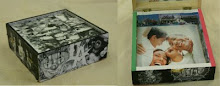
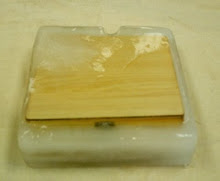
Turning to the idea of private art, we began by considering Frank O'Hara's stated aim in his mock-serious "Personism: A Manifesto": Making poetry that is "at last between two persons instead of two pages," a result of which, he says, will be the "death of literature"--"Literature," here, being what we might call the institutions and industries that say "this text, and not that one, matters." At any rate, we talked about how, for artists and writers sending work out to curators and editors overwhelmed by visual and alphabetic information, making work for one, particular person--a friend, a loved one--instead of "the public," might feel liberating. We looked at O'Hara's "For Grace, After a Party"; one of Dietrich Bonhoeffer's letters from prison written to his best friend, Eberhard Bethge; a work of art made by one friend for another, as a gift (see image below); and a few other examples.

After our discussion about some of the ideas surrounding "public" and "private" art, students were put into collaboration groups and given about an hour to make something using the following instructions:
Collaborate with your group to

1. Make a text piece (Poem? Recipe? Driving directions? Something else?)
                                        OR
2. Make a visual piece (in reality or as proposal/mock-up)
                                        OR
3. Make a visual + text piece (in reality or as proposal/mock-up)

The piece you make should address a person whom all three of you want to address, or whom one of you wants to address (with the other members of the group helping to shape the expression). Or, the piece can be made to serve as memorial to an idea or a people.
If primarily a visual artifact, the piece should be site-specific. If primarily alphabetic, consider the mode of transmission.
Below are some of the pieces the students made. (At least one piece, documented by the students who made it, has not been included because it was so privately intended it felt inappropriate to share here. That's a kind of success, given the aims of the project.)


 Irene Paek, Claire Jacobson, Micah Hickerson:

~

Brendon Sylvester, Kyol Shorack, Katherine Sherlock:

~

Bethany Foster, Hannah Strandberg, Lydia Meyerdirk:

~
Micayla Jones, Esther Hedin:

~
Caylie Smith, David Giles, Rachel Ji:
~
Shell Grizzard, Olivia Blair, Andres Ramirez:

Saturday, April 13, 2019

Field Trip!

A few weeks back, we took at trip to the Hammer, in Westwood, to check out a retrospective of the work of conceptual artist Allen Ruppersberg. Much of what students in VVP do is consonant, in spirit, with Ruppersberg's endlessly inventive and often quite comic work. An example is the piece above, called The Singing Posters, which is comprised of a couple hundred brightly colored commercial posters printed with a phonetic transcription of Allen Ginsberg's "Howl." Other installations (there were so many!) included comic books hanging on strings we were invited to peruse, and a hall way created to resemble one from the high school Ruppersberg attended, complete with classroom doors through which, if you pressed your ear close, you could listen to the teachers lecturing on philosophy or science or what have you. Absolutely worth an afternoon.

After the students scattered around Westwood for lunch, we reconvened at Upside Down, a new coffee and art gallery space. The remarkable photographs of recent Biola phtot grad Lu Zhang were hanging on the walls.

It was, in short, a wonderful day--a reminder of what's right at our fingertips here in L.A.

Followers